

HOW TO CO-THINK WITH GEN AI


AI for Self-Thinkers
ANADAI® provides a way of thinking and working for collaboration with generative AI: for developing, testing, structuring, questioning and taking ideas further.
It is not about doing as much as possible yourself. Nor is it about handing over as much as possible to the machine.
Rather, it is about understanding the respective roles that humans and AI should play in a thought process – and maintaining control over it whilst collaborating with generative AI.
What do we delegate? What do we think through together? And what must remain the responsibility of humans?
CO-think for yourself.
Generative AI can research, sort, formulate, argue, summarise and take over entire work processes.
That’s handy. But not every task that we can hand over is one we should hand over.
Because with some tasks, it’s not just the result that’s valuable, but also the process of getting there: the sorting, questioning, discarding, weighing up and deciding.
The key AI skill, therefore, lies neither in doing as much as possible ourselves nor in automating as much as possible.
It lies in consciously deciding how the work is divided between humans and machines.
ANADAI® creates a learning and working framework for this: How do language models work? How do you communicate effectively with them? When should a machine execute a task, when should it disagree, when should it explore – and when is it better to remain silent?
Who's running who here?
Current research into collaboration between humans and generative AI describes different forms of division of labour.
Centaurs draw a relatively clear distinction: humans take on certain tasks, whilst the machine handles others.
Cyborgs work more closely with the AI: thoughts, interim results and roles constantly shift between human and machine.
Self-Automators largely hand over not only the execution, but also the decision regarding what is done and how it is done.
ANADAI® does not provide a one-size-fits-all answer to this.
It is not a question of working exclusively as a Centaur, a Cyborg or an Automator. It is about being able to switch consciously between these forms.
Sometimes delegation is exactly the right approach. Sometimes a clear division of labour is needed. And sometimes the real value only emerges from the intensive back-and-forth between humans and machines.
Taking the lead means deciding what is delegated, what is thought through jointly, and what must remain with humans – no matter how convincing the machine sounds or how tempting it may be to adopt its line of reasoning.
Direct, don't rabbit-hole.
Directing does not mean doing everything yourself.
The director’s role is to ensure that different skills, perspectives and pieces of information ultimately come together to form a coherent whole. This is precisely where an understanding of generative AI meets expertise in dramaturgy, writing and theatre.
After all, anyone who thinks using a language model faces surprisingly similar challenges:
What are we actually trying to create here?
Who takes on which role?
What information do we need now – and what can wait until later?
Where is there a lack of conflict?
Which variation should we try out?
When is the process heading in the wrong direction?
And which parts of this will actually make it into the play in the end?
Dramaturgy and directing are therefore not merely pretty metaphors for prompting at ANADAI®. They provide concrete techniques for guiding a thought process.
Dramaturgy: Finding the thread.
What exactly is the problem?
What do we already know?
What assumptions are we bringing to the table?
Where are the contradictions?
Which question has not yet been asked?
Dramaturgical work helps to turn material into a coherent train of thought – before the AI hastily produces answers to the wrong question.
Casting: The right role at the right time.
A language model can take on a wide variety of functions. It can research, structure, explain, provoke, contradict, generate variations or simulate a perspective one would not have thought of oneself.
The crucial thing is not to write the most sophisticated role prompts possible. What matters is recognising what form of support the thought process currently needs.
Rehearsal: Making possibilities visible.
A trial run is not an unfinished premiere. It is a space in which possibilities may be tested. This is precisely where one of the great strengths of generative AI lies: you can tentatively explore ideas, develop counter-arguments, run through scenarios, radically alter an approach, or examine the same question from five different perspectives.
Not every variation has to be good. It must first and foremost become conceivable.
Conflict: Thoughts need resistance.
Anyone who only ever receives confirmation will eventually end up going round in circles. That is why AI can deliberately take on the role of a counterpoint: challenging assumptions, formulating counter-arguments, seeking out inconsistencies or representing an uncomfortable perspective.
The aim is not contradiction for contradiction’s sake. Rather, it is to produce a thought that is more robust as a result.
Directorial intervention: Guiding the process.
Sometimes a dialogue develops brilliantly. Sometimes the AI suddenly produces melodious nonsense. Then you have to intervene: stop, go back, reframe, provide additional context, change a role, or realise that you should take the thinking further yourself at this point.
Direction means not confusing the process with the result.
Editing: Deciding what stays.
Generative AI can produce ten variations, simulate three opposing positions and steer a thought in surprising directions. But at some point, the trial run is over. Then someone has to decide:
What is convincing?
What is relevant?
What is right?
What fits the purpose?
What gets cut?
That is human authorship. The machine can provide material, resistance and possibilities. The direction remains with the human.
The difference.
‘Here are our documents. Use them to develop a strategy for the next three years.’
The AI analyses the material, identifies patterns, formulates objectives and suggests areas for action. The result can be excellent. But the machine has not merely formulated these; it has also played a part in determining which problem is the focus, which information appears relevant, and the logic behind the solutions. The human then assesses the final result.
Co-thinking under direction.
‘My hypothesis so far is: our problem is not a lack of growth, but a lack of focus. Help me test this assumption. What are the arguments for it? What are the arguments against it? What alternative definitions of the problem are there?’
The AI develops counter-hypotheses. The human decides which of these are worth exploring. Then the perspective shifts:
‘Look at the situation from our CFO’s point of view.’
‘Which assumption would a critical customer be most likely to dispute?’
‘What information are we still missing before we should even decide on a strategy?’
Research is carried out, ideas are discarded, new approaches are taken, roles are swapped, and variations are tried out. Just like in a rehearsal.
The AI can make suggestions that the human would not have thought of themselves. But it does not decide which of them make it into the play. The AI expands the scope of thinking. The human leads the process and is responsible for the outcome.
That is co-thinking under direction.
thinking & working with Gen AI
ANADAI® brings together three perspectives that are intrinsically linked in practical work with generative AI:
Understanding the technology.
What can language models do? How are their responses generated? What are their systematic strengths, limitations and risks?
Understanding the interaction.
How should context, tasks, roles and follow-up questions be structured so that a chat develops into a productive work process?
Understanding thought and design processes.
How do you formulate a question? How do you generate productive contradiction? How do you test different approaches? How do you maintain a clear thread amidst growing complexity?
This is where dramaturgy, writing and direction come into play. Not as a theatrical veneer over AI, but as a centuries-old practice in dealing with roles, perspectives, conflicts, information, variations and decisions.
This does not result in a rigid method, but rather a transferable way of thinking and working that can be applied to different tasks, people and language models.
The specific process can be roughly divided into three phases:
Preparation
Clarify the task and objective.
Assess whether, and for what purpose, AI is actually appropriate.
Identify existing knowledge, material and assumptions.
Define the context and roles.
Guiding question: What is actually supposed to happen here – and who should take on which part?
Development
Ask questions.
Allow for follow-up questions.
Switch perspectives.
Generate debate.
Try out different options.
Discard results and start afresh.
Guiding question: Which line of thinking will take us forward now?
Review
Verify facts.
Check assumptions.
Assess results against the objective.
Decide what to use, modify or discard.
Guiding question: Which of these is viable – and for which am I taking responsibility?
What's in it for you?
Greater clarity.
You’ll learn why Claude sometimes sounds a bit generic when you’re using it, and why ‘hallucinations’ aren’t a glitch but a consequence of how it works. You’ll discover the differences between interacting and communicating with people and with machines. You’ll learn to structure and formulate tasks more clearly – and to better understand your own role when working with generative AI.
More possibilities.
You’ll learn what else is possible in the wondrous world of artificial intelligence, beyond simply delegating writing tasks, image generation and PowerPoint presentations. You’ll broaden your own thinking and, in doing so, tap into productive capabilities of AI that not only complement your own thinking but truly enhance it.
Greater confidence.
You’ll learn to assess when and where the use of generative AI is worthwhile and where you’d be better off doing things yourself. You’ll build confidence in your abilities as a so-called ‘human-in-the-loop’ – that is, the person who remains in control when collaborating with AI. You’ll be able to contribute more confidently to decisions on what constitutes a sensible use of generative AI.
More fun.
Yes, really. Thinking with Gen AI puts you in a good mood – as long as you don’t let it lead you up the garden path. Anyone who learns to consciously manage their collaboration with Claude, ChatGPT, Gemini and the like will have the opportunity to rediscover their own way of thinking.
Who is this for?
The CEO who reviews decision-making documents ahead of board meetings, assesses market changes and prepares statements under time pressure – and for whom the scarcest resource is not information, but the time to think it through.
The project manager in a technology company who drafts annual reports, manages project communications and has to translate technical complexity into language that can be understood outside their own department.
The director of an agency who, on Monday morning, receives 80 pages of briefing material from a potential new client, from which she must produce a proposal by Wednesday that sounds as though she understands the client inside out.
The legal scholar who needs an AI that compares lines of argument in court judgements, drafts comments on complex regulatory debates and structures funding applications – whilst thinking ahead, rather than merely regurgitating information.
Offer
Keynotes
15 to 90 minutes
for small groups of up to 30 people; workshop elements can be incorporated
on-site, online or hybrid
tailored keynotes suited to your organisation available on request
Prices from CHF 2,000
Workshops & Webinars
In person, online or hybrid
Introduction to co-thinking with generative AI
Duration: 1–4 hours
Workshops and seminar series tailored specifically to your organisation or situation, on request
Practical and easy to understand
Prices from CHF 1,600
Coachings
One-to-one or in small groups of up to 4 people
Introduction to co-thinking with generative AI
Including a preparatory survey, personalised programme, documentation, handout and follow-up
For managers and knowledge workers
Prices from CHF 900
Consulting & support
Long-term consultancy and support within your organisation
Assessment of AI readiness and AI culture
Training and upskilling
Support during the transformation phase
Prices on request
feedback
«The coaching has produced astonishing results and delivered tangible benefits. Christian is exceptionally skilled at helping you grasp the potential of these tools in a very short space of time.»
Christoph Joder | CSEM
«The ANADAI session with Christian showed me what LLMs are really capable of – and how I can use them as thinking partners. I’d definitely recommend it!’»
Adrian Kohler | Farner AG
«I would wholeheartedly recommend this to anyone looking for professional onboarding. It was particularly helpful that Christian not only explained the technical features to me, but also showed me specifically how Claude can support my research work.»
Dr. iur. des. Aliénor Nina Burghartz | Universität Zürich
«Excellent coaching. It wasn’t just another prompting course that I could have watched on YouTube. Instead, it drew on years of experience as an author, dramaturg, entrepreneur and AI expert, tailored to our specific situation.»
B.P. | COO






«“Christian’s method has really opened my eyes and significantly boosted my productivity when using ChatGPT.”
Dennis Buck | Berater
«I realised just how amateurishly I’d been working with AI up until then. What surprised me most of all was how precise you have to be when giving the machine instructions if you want to get anything useful out of it. The session really broadened my horizons.»
Mathias Maurer | CEO Innovation Forces
your Human in this loop.
Christian has spent half his working life as a playwright, writing stories for the stage. In the other half, he develops strategies and communication for organisations that have something to say – but aren’t quite sure how.
In both worlds, it always comes down to the same thing: how do you build worlds, big and small, in which content has an impact? What does it take for someone to follow a story? What must be at stake for relevance to emerge?
What works on stage can be applied just as effectively to working with AI: treating machines like an ensemble turns better search engines into excellent thinking partners. It was from this idea that he developed ANADAI®.


Contact
Interested in a coaching, a workshop or a keynote? Feel free to get in touch with me!
phone
+41 78 720 08 83
hello@anadai.net
SH** in
SH** out.
ANADAI ermöglicht dir, LLMs wie einen kritischen Sparringspartner zu steuern – statt sie als Befehlsempfänger zu nutzen. Das macht deine Analysen entweder schneller oder aber deutlich besser – und mit ein bisschen Übung: beides.
ANADAI macht aus KI-Tools optimale Denkpartner für Menschen, die Wissensarbeit leisten und KI in ihrem Alltag nutzen wollen, um komplexe Herausforderungen zu managen – ohne sich bevormunden oder langweilen zu lassen.
ANADAI funktioniert mit jedem Modell – ChatGPT, Claude, Gemini etc. Für Organisationen mit höheren Compliance-Anforderungen arbeiten wir gezielt mit europäischen Lösungen wie Langdock, n8n, Apertus oder lokalen Modellen. Das Prinzip bleibt dasselbe: Regie führen statt das eigene Denken auszulagern.
ANADAI hat kein Ablaufdatum: Einmal erlernt, steht dir diese methodische Denkweise ein Leben lang zur Verfügung – egal mit welchem AI-Tool du arbeitest.

Christian Hansen hat ANADAI entwickelt, um selbst besser mit KI arbeiten zu können. Mittlerweile vermittelt er sein Wissen und seine Erfahrungen in Coachings, Workshops, Schulungen und Keynotes.
ANADAI is a method for improving human-machine collaboration.
By combining techniques from theatre, psychology, strategy development and communication, ANADAI opens up hybrid thinking spaces where you can rediscover your own work and thinking.
ANADAI is not AI hype, inflated prompt engineering or a new crypto fantasy. ANADAI has been proven to work and, once learned, can be used as a thinking and working tool for the rest of your life – even beyond the use of AI.
Developed by a theatre maker, communications and strategy consultant and independent entrepreneur, ANADAI pragmatically addresses the analysis, management and mastery of complex challenges with the help of large language models such as Chat GPT, Perplexity, Gemini, Claude & Co.
frag nicht, was KI für dich tun kann.
finde raus, was passiert, wenn du dich auf sie einlässt.
Kein hype.
ein Denkwerkzeug.
KI löst nicht jedes Problem – im Gegenteil: Ohne Verständnis für Technologie, Prozesse und eigene Rolle, ohne Anwender-Strategie, entstehen eher neue (teure) Baustellen.
ANADAI ist eine Anleitung zur strategischen Zusammenarbeit mit hybrider Intelligenz – mit Methode, Struktur und kreativer Klarheit.
Du musst kein Tech-Profi sein, um ANADAI anzuwenden. Einmal erlernt, kannst du die Methode zudem mit jeder KI anwenden, ein Leben lang.


Wenzel Weikert | Archipel AG
Koordinator Digitale Bauprozesse
«Besonders beeindruckt hat mich Christians Fähigkeit, relevante Themen effizient voranzubringen. Er weiss genau, welche Fragen wann gestellt werden müssen. Er hat uns genau dort abgeholt, wo wir standen und in kürzester Zeit dorthin geführt, wo wir hinmussten.»
Über einen 3-stündigen Team-Workshop im Juni 2025
kommunikation.
Psychologie.
Strategie.
theater.
ANADAI.
Christian verbindet 20 Jahre Erfahrung als Autor, Dramaturg, Berater und Dozent. Mit ANADAI hat er eine Methode entwickelt, um grosse Sprachmodelle nicht als Werkzeuge, sondern als Ensemble zu führen – für Klarheit, Tiefe und Wirkung im Denken.


Dennis ist der Technik-Profi- Er bringt sein Know-how aus KI-Implementierung und digitaler Transformation ins Team ein. Mit Erfahrung aus Industrie 4.0, Datenanalyse und Robotik unterstützt er die Entwicklung von Custom GPTs und Mensch–KI-Interaktionsservices.


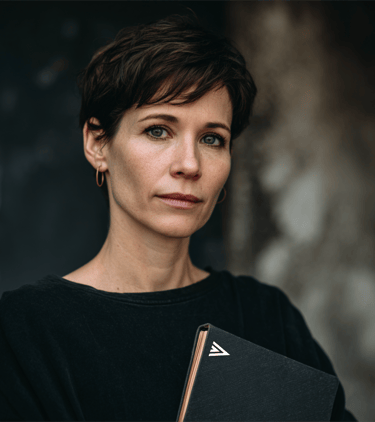
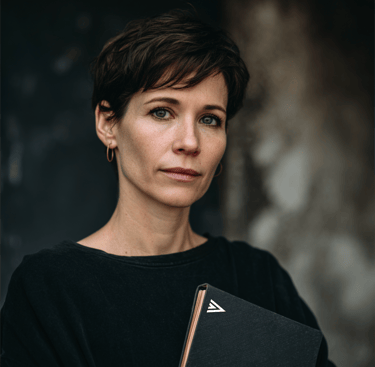
Anna ist unsere Prompt Engineering und HR Expertin. Sie entwickelt und optimiert Agents. Sie denkt strukturiert, arbeitet iterativ und sorgt dafür, dass im Team aus Ideen einsatzbereite Werkzeuge entstehen. (Anna ist eine KI.)


Charly ist unser Ghostwriter. Er macht aus Gedanken Texte. Er formuliert Entwürfe, die (meist) den richtigen Ton treffen und macht komplexe Inhalte verständlich. (Charly ist eine KI.)


Deborah ist für Grafik und Visualisierungen zuständig. Sie übersetzt Konzepte in Bilder. Mit ihren kreativen Skizzen und Visuals macht sie komplexe Prozesse einfach verständlich und greifbar. (Deborah ist eine KI)

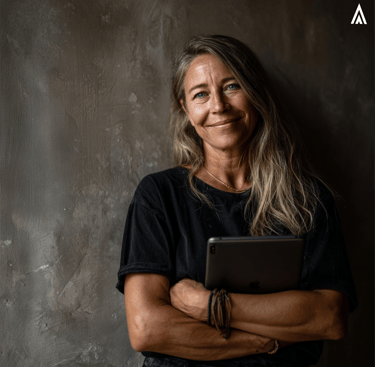
Audrey unterstützt Christian im Bereich Administration. Sie hält Prozesse zusammen. Sie priorisiert, strukturiert und schafft Ordnung, damit Projekte ihren Fokus behalten. (Audrey ist eine KI)


Bernd ist Research-Profi. Er taucht tief in Themen ein. Er recherchiert, filtert und verdichtet Wissen, das als Grundlage für Entscheidungen und Inhaltsentwicklungen dient. (Bernd ist eine KI)


Eliane ist Strategin und spezialisiert auf Business Development. Sie verbindet Ideen mit Märkten. Sie denkt Geschäftsmodelle weiter und identifiziert Chancen für neue Angebote. (Eliane ist eine KI)
ANADAI
Staging AI
hello[at]anadai.net
+41 78 720 08 83
© 2026. All rights reserved.
Ahornstrasse 17
CH 4055 Basel